
Spreadsheet vs Tool Tracking Software: What Actually Works for Trades?
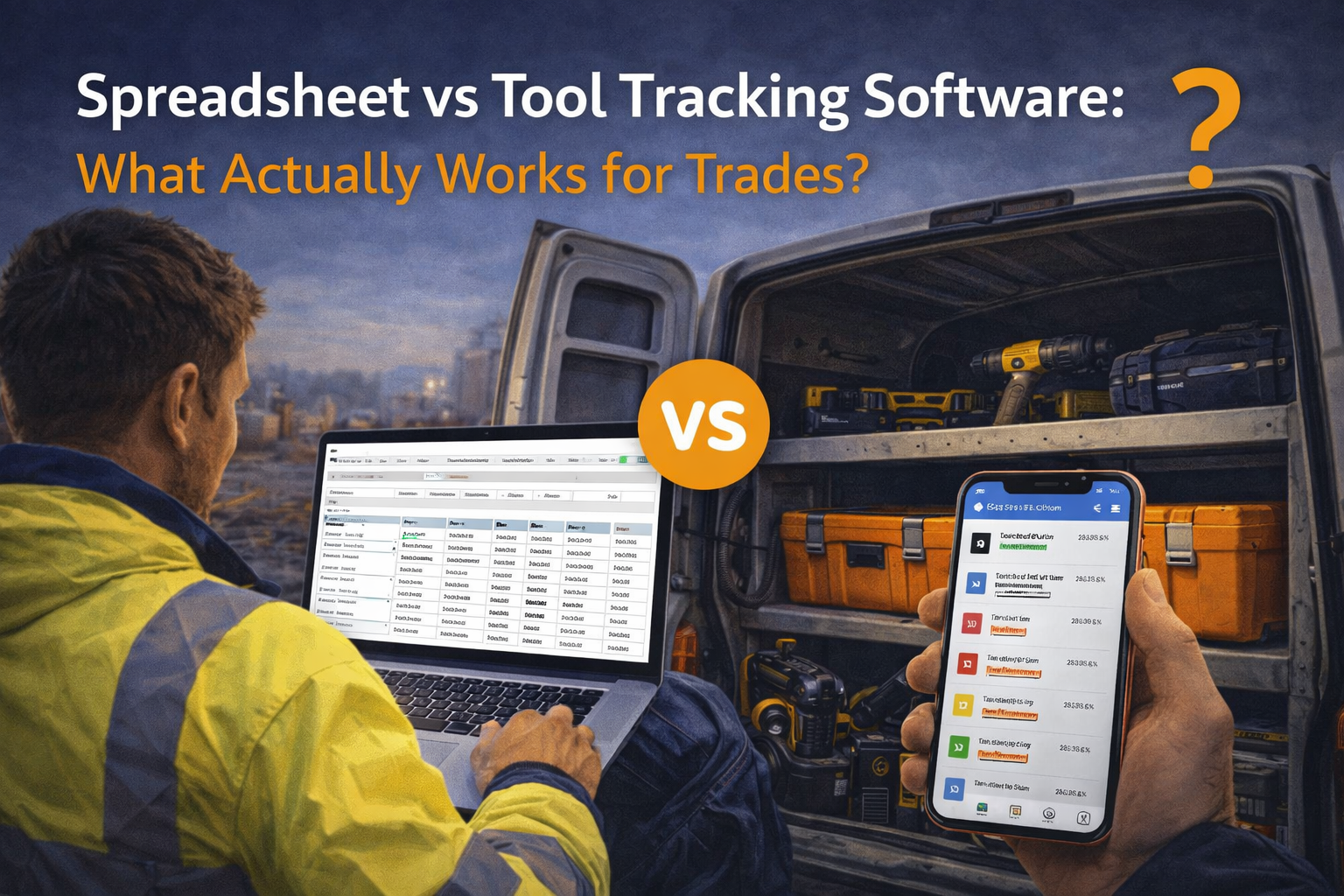
A lot of trade businesses start out tracking tools in a spreadsheet.
It makes sense.
It’s simple.
It’s familiar.
And it feels like a quick way to stay organised.
But over time, many businesses realise something:
Spreadsheets work at the start — but they don’t always work long term.
Why spreadsheets are so common
Spreadsheets are usually the first step because they’re easy to set up.
You can:
list tools
add notes
track basic details
share the file
For a small team with a limited number of tools, that can be enough.
At least in the beginning.
Where spreadsheets start to fall down
The problems don’t usually show up straight away.
They build over time.
1. They rely on manual updates
If someone forgets to update the spreadsheet, it becomes inaccurate.
And once the data is wrong, people stop trusting it.
2. They’re not built for real-world use
On-site, people don’t want to:
open files
scroll through lists
update rows
So updates get skipped.
3. No clear tool status
Spreadsheets often don’t clearly show:
what’s in use
what’s missing
what’s damaged
what’s been replaced
That leads to confusion.
4. Hard to keep consistent
As tools move between:
vans
jobs
team members
Keeping everything up to date becomes harder.
5. Information gets scattered
You might have:
the spreadsheet in one place
photos somewhere else
receipts in emails
Which defeats the point of having a system.
What tool tracking software does differently
Tool tracking software is designed specifically for this job.
Instead of trying to adapt a spreadsheet, it gives you:
a central tool register
clear tool status
easy updates
access from anywhere
all information in one place
It removes a lot of the friction that causes spreadsheets to fail.
The real difference in practice
The biggest difference is not features.
It’s consistency.
A system only works if people actually use it.
Spreadsheets often get ignored because they’re not built for day-to-day use on site.
Dedicated tools are designed to fit how trades actually work.
When a spreadsheet is enough
To be fair, spreadsheets can still work if:
you’re a solo tradesperson
you have a small number of tools
everything stays in one place
you update it regularly
In those cases, a spreadsheet might be all you need.
When it’s time to move on
You’ll usually notice it’s time to upgrade when:
tools start going missing
you’re buying duplicates
nobody is updating the spreadsheet
you’re not sure what you actually have
records are incomplete
That’s when the limitations become obvious.
A simpler way to stay organised
The goal isn’t to add more admin.
It’s to make things easier to manage.
Tools like ToolSafe are designed specifically for trades, making it easier to:
register tools
track status
store proof of ownership
keep everything in one place
Without relying on spreadsheets that quickly become outdated.
Final thought
Spreadsheets are a good starting point.
But they’re not always a long-term solution.
As your business grows and tools move more frequently, having a system that’s built for the job makes a big difference.
Get started
If you want a simpler way to track tools without relying on spreadsheets: