
What To Do in the First 24 Hours After Tools Are Stolen
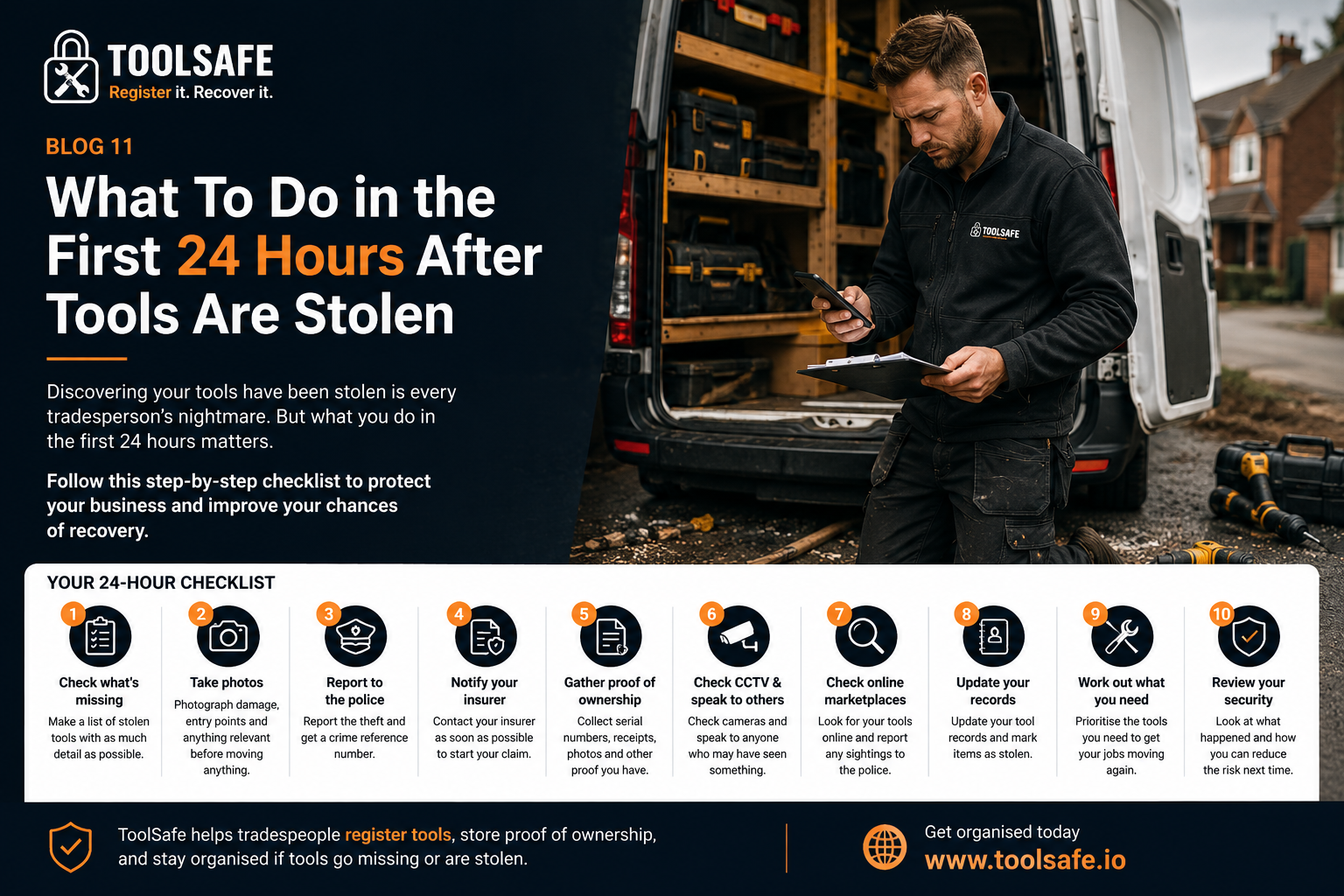
Discovering your tools have been stolen is every tradesperson’s nightmare.
It is stressful, frustrating, and expensive — especially when those tools are needed for work the same day.
But what you do in the first 24 hours matters.
Acting quickly can help you:
report the theft properly
gather useful evidence
support an insurance claim
improve your chances of recovery
get your business moving again
Here is a practical step-by-step checklist for tradespeople and small trade businesses.
1. Check exactly what has been stolen
The first step is to work out what is actually missing.
Try not to rely on memory if you can avoid it.
Make a clear list of everything stolen, including:
tool name
brand
model
serial number
approximate value
where it was stored
when you last saw it
If you already have a tool register, this step will be much easier.
If you do not, write down as much detail as you can while it is fresh in your mind.
2. Take photos before anything is moved
Before tidying up or moving things around, take photos.
Capture:
damage to the van, lock, door, window, garage, or storage area
empty shelves or missing tool spaces
broken locks or forced entry marks
surrounding area
anything unusual nearby
These photos may help when reporting the theft and speaking to your insurer.
The more evidence you have, the better.
3. Report the theft to the police
Once you have checked what is missing and taken photos, report the theft to the police.
If the crime is still happening or someone is in immediate danger, call emergency services.
If the theft has already happened and there is no immediate danger, report it through the appropriate non-emergency route.
When you report the theft, provide as much detail as possible, including:
what was stolen
when it happened
where it happened
any damage caused
serial numbers, if available
photos or identifying details
any CCTV or witness information
Make sure you keep your crime reference number safe. You may need it for insurance, updates, and future recovery.
4. Notify your insurance company
Contact your insurer as soon as possible.
Do not wait until you have every detail perfect.
Start the claim and ask what evidence they need.
They may ask for:
crime reference number
list of stolen tools
proof of ownership
receipts or invoices
photos
serial numbers
details of where the tools were stored
photos of any damage
Every policy is different, so always follow your insurer’s instructions carefully.
5. Gather proof of ownership
Proof of ownership is one of the most important things after tool theft.
Useful proof can include:
receipts
invoices
order confirmations
supplier records
serial numbers
photos of the tools
tool markings
service records
The aim is to show clearly that the tools belonged to you or your business.
If your proof is scattered across emails, phone photos, paper receipts, and old folders, this step can take time.
That is why keeping ownership records organised before anything happens is so useful.
6. Check CCTV and speak to nearby people
If the theft happened near a home, site, yard, lockup, or business unit, check whether there may be CCTV.
This might include:
your own cameras
neighbouring homes
nearby businesses
site security cameras
dashcams
doorbell cameras
Also speak to anyone who may have seen something unusual.
Write down names, times, and details where possible.
If you find useful footage or information, share it with the police and your insurer.
7. Check online marketplaces carefully
Stolen tools are often moved quickly.
It may be worth keeping an eye on:
Facebook Marketplace
eBay
Gumtree
local selling groups
car boot sale pages
trade buy/sell groups
Search for your tool brands, models, and unusual identifying marks.
If you think you have found your stolen tools, do not confront the seller yourself.
Take screenshots, save links, and pass the information to the police.
Your safety comes first.
8. Tell your team and update your records
If you run a small team, let everyone know what has happened.
Make sure they know:
what was stolen
what tools are no longer available
what jobs may be affected
what needs replacing urgently
what to look out for
Then update your tool records.
Mark stolen tools clearly so you have a proper record of:
what was taken
when it was reported
whether a crime reference number was issued
whether an insurance claim was started
whether replacements were bought
This helps keep the business organised after the initial stress has passed.
9. Work out what needs replacing first
Not every stolen tool needs replacing immediately.
Start with the tools that affect your ability to work.
Ask:
What do we need for today’s jobs?
What do we need this week?
Can anything be borrowed temporarily?
Can any jobs continue without replacing everything straight away?
This helps reduce panic spending.
It also helps you avoid buying duplicate tools if something later turns up or if insurance covers replacement.
10. Review how the theft happened
Once the urgent steps are handled, take time to review what happened.
Look at:
where the tools were stored
how access was gained
whether tools were visible
whether locks or storage need upgrading
whether tools should be removed overnight
whether your records were complete enough
This is not about blaming anyone.
It is about reducing the chance of it happening again.
Why preparation makes the first 24 hours easier
The first 24 hours after tool theft are difficult enough.
They become much harder if you are also trying to work out:
what tools you own
which serial numbers belong to which tools
where receipts are stored
whether you have photos
who last used what
Good records make a bad situation easier to handle.
They do not stop theft completely, but they do help you respond faster and more confidently.
A better way to stay ready
ToolSafe helps tradespeople register tools, store proof of ownership, and stay organised if tools go missing or are stolen.
By keeping tool details, serial numbers, photos, proof of ownership, and status information in one place, ToolSafe makes it easier to respond quickly when something goes wrong.
Final thought
Tool theft is stressful, but having a clear process helps.
In the first 24 hours, focus on:
checking what is missing
taking photos
reporting the theft
getting a crime reference number
contacting your insurer
gathering proof of ownership
updating your records
reviewing your security
The better prepared you are, the easier it is to act quickly when it matters most.
Get started
If you want a simple way to keep tool records, proof of ownership, photos, and status updates organised in one place, visit:
Register it. Recover it.